What are dentures?
A denture is a removable prosthesis used to replace missing teeth. Commonly referred to as ‘false teeth’, a denture is traditionally made of acrylic or a combination of acrylic and light alloy metal. However, new materials and techniques such as valplast or from 3D printers have been developed to make dentures stronger and to make them look better for longer.
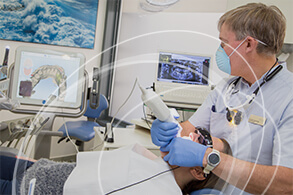
Our dentures are created through in-house 3D scans. These can quickly and easily create highly accurate models, which can colour-match to your gum and existing teeth. We may also recommend crowns or “caps” on some of your natural teeth.
A partial denture is fitted to replace some missing teeth whilst a complete denture is indicated when all natural teeth are missing. A good set of dentures helps you to eat, speak and often improves your appearance. Ask your dentist which kind of removable partial denture is right for you.
How long does it take to make dentures?
Depending on the complexity of each case, the duration of the treatment will vary.
The denture making stages can be separated out into these stages:
1. Initial examination and diagnosis,
2. Take scans or impressions of your mouth, and how the teeth come together (bite registration)
3. Try-in of the denture, usually in wax to adjust as needed before making the final denture
4. Fitting of the final denture
5. Adjustments after a few weeks. During the first few weeks, the denture can rub on the gums creating some sore spots. We can adjust these spots as they arise to make sure they are more comfortable for you.
What to expect?
New dentures always feel strange when first placed in your mouth, but you will start to get accustomed to them. Adaptation varies with different people. The more you wear them, the faster you get used to them.
Useful suggestions to help you to adapt to the new dentures:
- Eating – Eating will take a little practice. Start with soft foods and foods cut into small pieces will help. Chew slowly using both sides of your mouth at the same time to prevent dentures from tipping. Once you become accustomed to chewing, include other foods until you return to your normal diet.
- Increased salivary flow – You may experience an increase in salivary flow when the dentures are first inserted. This is a natural response of the salivary glands that will return to normal after a few weeks. You can improve the situation by swallowing more often.
- Speech – New dentures may alter your speech initially. Pronouncing certain words may require practice. Reading out loud and repeating troublesome words will speed up the adaptation process. This problem rarely persists beyond two weeks.
- Spots – Minor irritation caused by surface irregularities or pressure spots on the denture-bearing areas are quite common. We will relieve the discomfort by adjusting the denture surface. Stop wearing the denture if the irritation is very painful, however we recommend wearing your dentures for 6 hours prior to seeing your dentist so the sore area can be easily seen.
What are the Alternatives to Dentures?
Dentures are the most cost effective way to replace missing teeth. However, they are removable, and so often not your first choice. The alternatives are either a dental bridge or dental implants.
A dental bridge uses the adjacent teeth to support the missing tooth. Therefore, the adjacent teeth need to be strong for this to be a viable option for you. The adjacent teeth are then prepared to hold the false teeth. Find out more about bridges by clicking here.
A dental implant is a small titanium screw that goes into your bone, and a fast tooth can be placed on top. This replaces your missing tooth without having to cut into the adjacent teeth at all. Find out more about dental implants by clicking here.
Back to treatments