Dental implants are one of the most effective, long-lasting solutions for replacing missing teeth — and at City Dental Clinic we have extensive experience placing them for patients across the City of London. This guide answers the most common questions so you can decide whether implant treatment is right for you.
Book a consultation for dental implants
What Are Dental Implants?
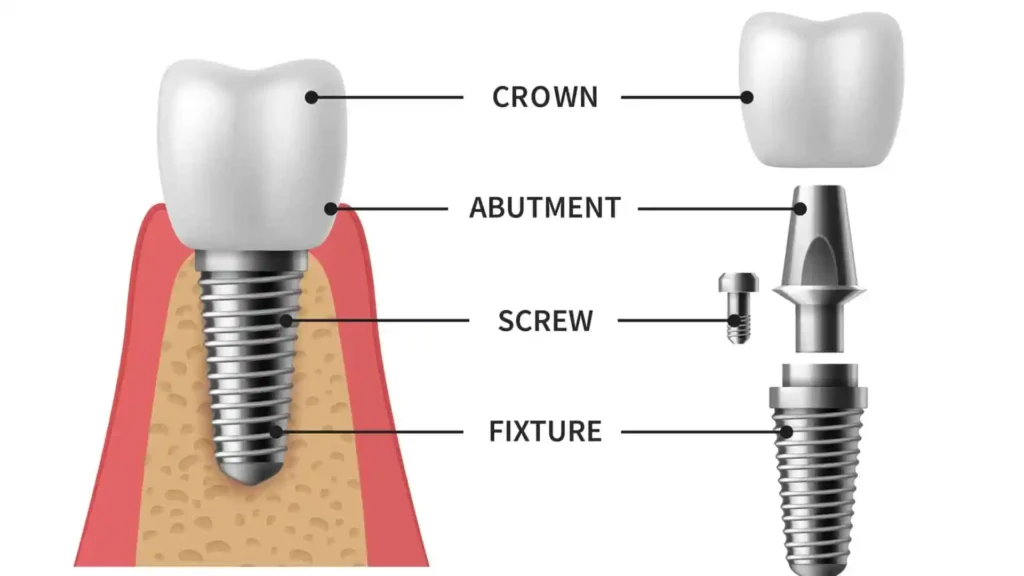
Dental implants are small metal screws — usually made of titanium or a titanium alloy — that are placed into the jawbone to act as artificial tooth roots. Over time the implant fuses to the surrounding bone, and a custom-made crown (false tooth) is attached on top via a connector piece called an abutment. The result looks, feels and functions just like a natural tooth.
Implants can be used to replace a single missing tooth, several teeth, or — in combination with a fixed bridge — an entire arch of teeth.
Who Is Suitable for Dental Implants?
Most adults who are in good general and oral health are suitable candidates for dental implants. The key requirements are
Having healthy gums, free from active gum disease, having sufficient jawbone density to support the implant (a CBCT scan at our practice will confirm this). And good general health — most medical conditions do not prevent treatment, but your dentist will assess your full medical history.
Who May Not Be Suitable?
Young people whose jaws are still growing are generally advised to wait until growth is complete. Heavy smokers and those who drink alcohol excessively have a higher risk of implant complications; some clinicians will ask patients to address these habits before proceeding. Active gum disease must also be treated before implants can be placed.
How Do We Assess Your Suitability?
At your consultation we carry out a thorough examination of your teeth and gums and we may take a 3D CBCT scan of your jaw. This allows us to plan the precise position, length and width of each implant. We will then produce a personalised treatment plan, including a full cost breakdown, for you to take away and consider.
The Dental Implant Process
- Assessment & Treatment Planning – full oral examination, CBCT scan, and personalised treatment plan with costs and timescale.
- Implant Placement — the implant screw is placed into the jawbone under local anaesthetic (sedation is available for nervous patients). A single implant typically takes around 30–60 minutes.
- Healing — the implant fuses to the bone over 6 weeks to 6 months. A temporary tooth can be provided so you are never left with a visible gap.
- Restoration — once healing is confirmed, your custom-made crown is attached. It is crafted by a dental technician specifically for your smile.
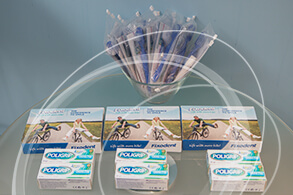
- Maintenance — regular check-ups and hygienist visits keep your implant healthy for the long term. We will give you specific home-care instructions and the right tools for the job.
Standard Implant Treatment
The majority of cases are completed over around 3-4 months, allowing around 3 months of healing between plaving the implants(s) and going to the next ‘restoration’ stage, or fitting of the false tooth.
Same-Day Implants (“Teeth in a Day”)
For patients who have lost most or all of their teeth, it is sometimes possible to place multiple implants and fit a temporary full-arch bridge on the same day. A final, permanent bridge is then constructed once full integration has taken place. This option is not suitable for everyone — your dentist will advise whether it is appropriate for you.
How Long Do Dental Implants Last?
With good oral hygiene and regular professional maintenance, dental implants can last many years — clinical data shows around 94 out of 100 implants surviving 10–15 years. Think of them in a similar way to a hip replacement: they are highly durable, but they are not guaranteed for life and will require ongoing care and periodic review.
Taking Care of your Dental Implants
Clean around your dental implants twice everyday (when brushing your teeth)
Use products including inter-dental brushes to clean effectively between the teeth
Pay particular attention to the gum line when brushing your dental implants
Attend all review appointments (we advice at least one a year)
Visit the hygienist regularly to get a professional clean around your teeth and implants
How Much Do Dental Implants Cost?
The cost varies depending on the number of implants required, the complexity of the case, the type of restoration chosen, and overall treatment time. Because every patient is different, we provide a full written cost breakdown at the planning stage so there are no surprises. A guide to our fees can be found here.
Dental implants are generally more expensive than bridges or dentures in the short term, but they are also the most durable and biologically sound solution. We offer flexible payment plans to help spread the cost — please ask at reception for details.
Dental implants are not available on the NHS except in very limited circumstances (for example, following facial trauma or tumour surgery). Treatment at City Dental Clinic is provided on a private basis.
Alternatives to Dental Implants
Implants are not the only way to replace missing teeth. Depending on your situation, the following alternatives may be suitable:
- Dental bridge — the teeth either side of the gap are prepared and a fixed false tooth is bonded between them. A Maryland bridge uses small bonded wings rather than full crown preparation.
- Removable partial or full denture — a removable acrylic or cobalt-chrome appliance that replaces one or more teeth. The most cost-effective option for multiple missing teeth.
- Leaving the gap — always an option, but it is worth knowing that over time the jawbone in the area can thin, and adjacent teeth may drift. This can make any future treatment more complex.
We will discuss all available options with you at your consultation so you can make a fully informed choice.
Common Myths About Dental Implants
Implants are long-lasting but may not permanent. With good care, the majority survive over 10–15 years, but they are not a “fit and forget” solution — regular maintenance is essential. The crown on top of the fixture is the component most likely to require changing over time.
You absolutely do. Good oral hygiene is the single biggest factor in the long-term success of an implant. Twice-daily cleaning and interdental brushing are non-negotiable.
Most patients are surprised by how comfortable the experience is. Any post-operative discomfort is usually mild and manageable with standard over-the-counter painkillers.
Success rates in the UK are very high — often cited at up to 95%. The evidence base for implants is extensive and well-established.
Adults of any age can lose a tooth — through accident, sport, infection or disease. Any adult with a healthy jawbone can be considered for treatment.
The opposite is true. A healthy mouth produces the best implant outcomes. The longer you wait, the more bone loss can occur, making treatment more complex.
Frequently Asked Questions
Ready to Find Out If Implants Are Right for You?
Book a consultation at City Dental Clinic and we will assess your suitability, answer all your questions, and provide a full written treatment plan with no obligation.
020 7638 0870 ·
reception@citydental.co.uk